They also keep Langerhans cells of the epidermis and lymphocytes of the dermis in place. Keratinocytes form a barrier against environmental damage by heat UV radiation water loss pathogenic bacteria fungi parasites.
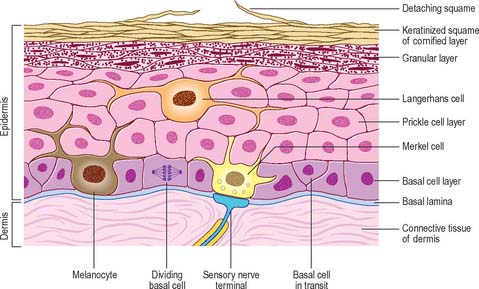
Keratinocytes Their Purpose Their Subtypes And Their Lifecycle Tempo Bioscience
They are found only in the deepest layer of the epidermis called the stratum basale.
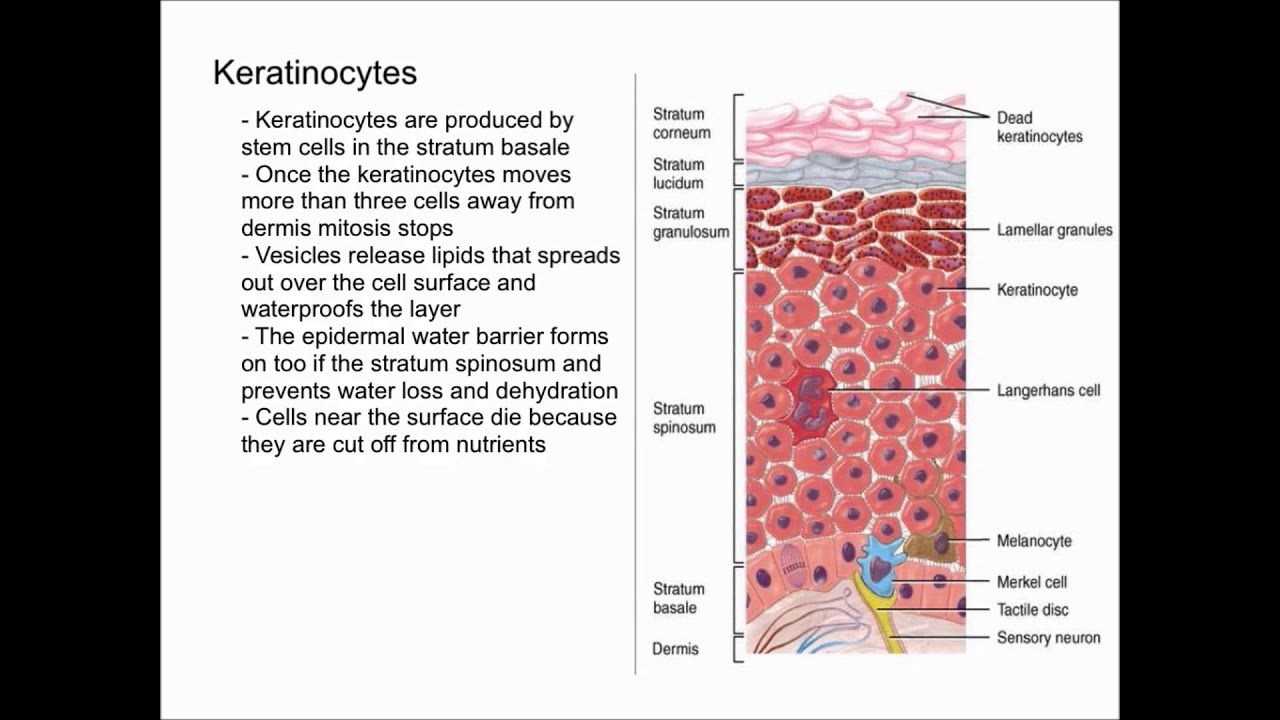
. Keratinocytes within the epidermis begin dividing in the bottom layer. Thick skin layers of epidermis with dead keratinocytes. Stem cells are undifferentiated cells that divide and give rise to the keratinocytes described next.
4 True or false. Within the epidermis there are four major layers of cells called keratinocytes that provide structural support for the skin. Keratin makes our skin tough and provides us with much-needed protection from microorganisms physical harm and chemical irritation.
The keratinocytes in the stratum spinosum begin the synthesis of keratin and release a water-repelling glycolipid that helps prevent water loss from the body making the skin relatively waterproof. The epidermis is the skin or more specifically the outer layer of mammalian skin cells. Keratinocytes produce the most important protein of the epidermis.
Keratinocytes constitute the majority of epidermis and they have crucial role in initiation maintenance and completion of wound healing 8889. They make keratin a protein that provides strength to skin hair and nails. In addition to these four layers you have another layer specific to your soles and palms.
The epidermis exhibits variations among different body regions within a single individual as well as differences between individuals. The keratinocytes the most abundant cells which are present in all the layers of the epidermis and produce keratin to protect epithelial cells from mechanical and non-mechanical stress. Keratinocytes of the epidermis are usually present for about _____ weeks.
Male pattern baldness is caused by a combination of genetics and _____ temperature regulation. The process of mitosis that is very common with somatic cells creates new cells on the superficial layers and the old are shed from their epidermis. Histologically the epidermis is composed primarily of four tightly-adherent layers of squamous epithelium organized into distinct vertical zones by stages of differentiation.
Structure Role in Immune Response and Differentiation. Keratinocytes are maintained at various stages of differentiation in the epidermis and are responsible for forming tight junctions with the nerves of the skin. It is normal for many to die off in the process.
Epidermis The epidermis is a dynamic structure acting as a semi-permeable barrier with a layer of flat anuclear cells at the surface stratum corneum. Basal cells in the basal layer of the skin are sometimes referred to as basal keratinocytes. Keratinocytes are the primary type of cell found in the epidermis the outermost layer of the skin.
Keratinocytes are the most common type of skin cells. They are named for their role in synthesizing keratin. The skin is ectodermal in origin and composed of a several differentiated layers of epithelium.
Structure of the Epidermis The epidermis is a multilayered epithelial structure composed of keratinocytes that produce the structural protein keratin. Two main types of cells compose the skin epidermis. Dermatitis artefacta is a psycho-cutaneous disorder characterized by self-inflicted cutaneous injuries often in association with an underlying psychiatric disorder or as a response to external stressors.
The epidermis is composed of 95 keratinocyte cells. Keratinocytes produce the most important protein of the epidermis. As you can imagine this involves an intricate balancing act with a lot of players involved to keep the peace.
Keratinocytes are the most common type of cell in the epidermis and are responsible for the synthesis of the protein. And melanocytes which are present at the basal layer of the epidermis and produce the protective pigment melanin 12. In humans they constitute 90 of epidermal skin cells.
The types of keratinocytes. Keratinocytes of epidermis are usually present for about _ weeks. The keratinocyte proteins desmoglein 1 and desmoglein 3 were found to play the key role for this group of diseases.
This protein is appropriately called keratin. This renewal of the human epidermis takes an average of 3 to 4 weeks which includes the keratinocytes that are responsible for the protection against UV lights as well as aid in preserving against microbial viral fungal and. Keratinocytes change in appearance from one layer of the skin to the next.
They act as a physical barrier between the environment and the organism 9091. Keratinocytes are the predominant cell type of epidermis and originate in the basal layer produce keratin and are responsible for the formation of the epidermal water barrier by making and secreting lipids. They push already formed cells into the upper layer.
Cutaneous Squamous Cell Carcinoma. Cutaneous lesions suggestive of dermatitis artefacta are dependent on the means. Keratinocytes can be the target of chronic inflammatory systemic diseases such as in the group of autoimmune intraepidermal blistering diseases of the skin called pemphigus.
Keratinocytes are found in the outermost layer of the skin called the epidermis. The epidermis regenerates in orderly fashion by cell division of keratinocytes in the basal layer with maturing daughter cells becoming increasingly keratinised as they move to the skin surface. These cells form in the deep basal-cell layer of the skin and take about a month to reach the surface.
Stratified keratinocytes make up the epidermis. Usually so long as an approximately equal number of cells are being created for both populations this balance is maintained. As new keratinocytes are produced atop the stratum basale the keratinocytes of the stratum spinosum are pushed into the stratum granulosum.
Keratinocytes also regulate calcium absorption by the activation of cholesterol precursors by UVB light to form vitamin D. Keratin makes our skin tough and provides us with much-needed protection from microorganisms physical harm and chemical irritation. Function of skin influenced by vast capillary networks and sweat glands in the dermis.
Keratinocytes are the great majority of epidermal cells. The epidermis is composed of five types of cells Figure 2. A histopathologic clue to dermatitis artefacta.
This protein is appropriately called keratin.
Keratinocytes Youtube Stem Cell Skin Care Skin Anatomy Skin Science

An Up Close Look At The Anatomy Of The Epidermis Skin Anatomy Epidermis Anatomy

Epidermal Keratinocytes Initiate Acute Pain Epidermal Keratinocytes Download Scientific Diagram



0 Comments